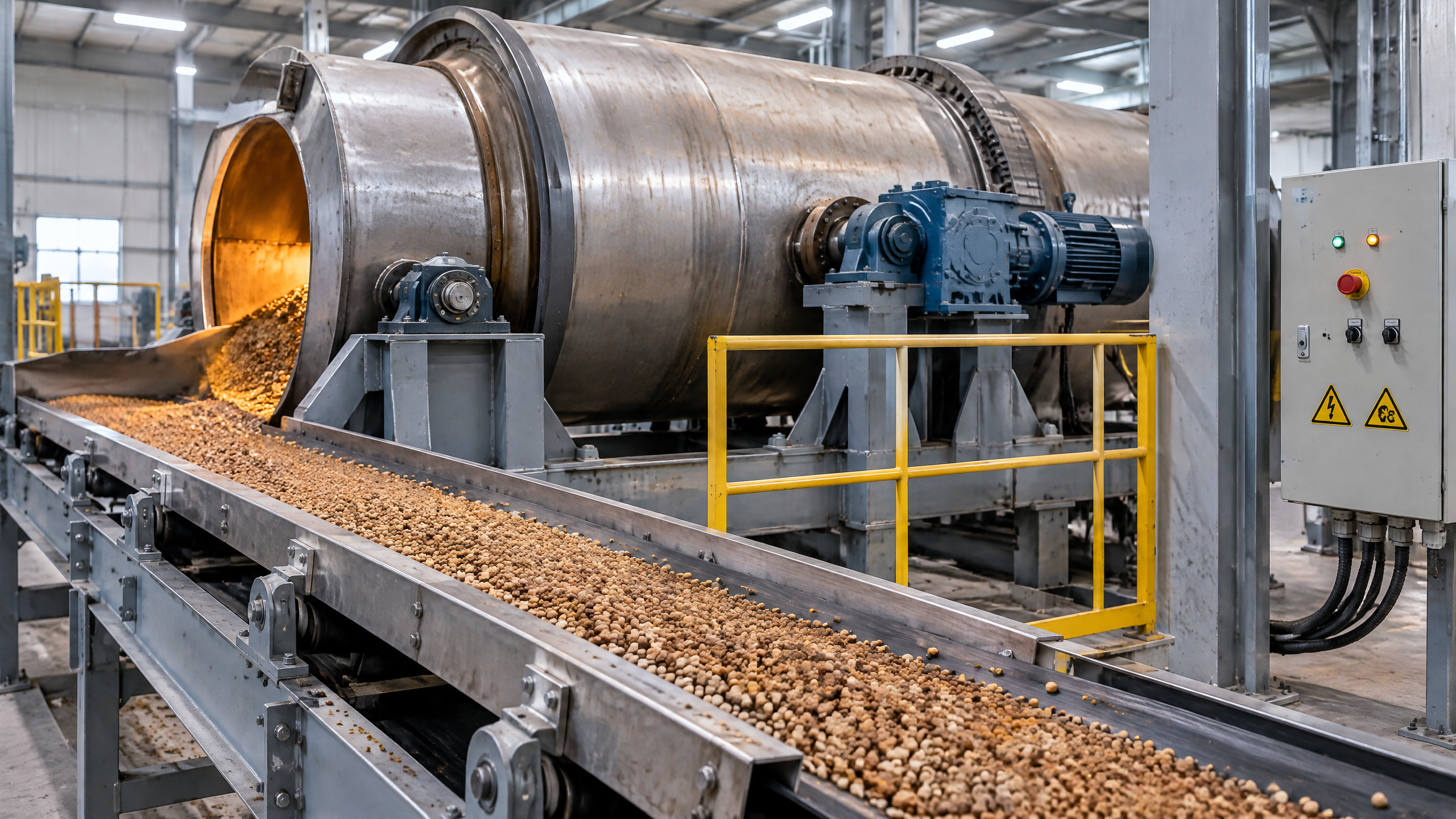

Slow-release boron. Season-long soil nutrition. Intermediate solubility — by design.
Ground ulexite (NaCaB₅O₉·8H₂O) occupies the deliberate space between fast-release boric acid and almost-insoluble colemanite. At 3.2 g/L solubility, it releases boron gradually throughout the growing season — delivering the sustained availability that perennial crops, multi-cut forage systems, and slow-to-respond soils require. It also provides sodium and calcium alongside boron, making it the preferred grade for NPK fertilizer blending and glass compositions requiring a combined sodium-calcium borate mineralogy.
Why intermediate solubility is not a compromise — it is the specification
Boron products are sometimes described as if higher solubility is always better. For foliar spray — where rapid dissolution in the spray tank is required — that is correct. For direct soil application, it is precisely wrong. Boron toxicity and boron deficiency can occur in the same soil within the same season if the wrong release profile is used. Rapid-release boric acid (57.2 g/L solubility) delivers all available boron within the first rainfall events after application. In leachable soils, this boron washes below the root zone before the critical growth stage. In heavy soils, it creates a temporary high-boron zone that inhibits germination. Ulexite at 3.2 g/L releases boron incrementally with each soil moisture event — maintaining adequate root zone boron concentration from seedling establishment through flowering and grain fill. It is also the preferred grade for NPK blending because its intermediate solubility — much lower than borax, much higher than colemanite — provides the agronomically appropriate release profile for blended compound fertilizers applied at planting.
| Solubility 20°C | 1.8 g/L |
| B₂O₃ | 38–42% |
| Na₂O | ≤0.3% |
| CaO | 26–28% |
| Primary use | Ceramic frits/glazes |
| Soil release | Very slow — 6–12 months |
| Solubility 20°C | 3.2 g/L (optimal soil) |
| B₂O₃ | 43–47% (higher than cole.) |
| Na₂O | ~7.7% (useful in glass) |
| CaO | ~13.8% |
| Primary use | Soil · NPK · Glass |
| Soil release | 4–6 months (ideal) |
| Solubility 20°C | 57.2 g/L |
| B₂O₃ | 56.3% |
| Na₂O | None |
| CaO | None |
| Primary use | Glass · Ceramic · Pharma |
| Soil release | Rapid — 2–4 weeks |
Every parameter confirmed per production batch with test method
| Parameter | Test method | Agricultural grade | Ceramic / glass grade | Industrial significance |
|---|---|---|---|---|
| B₂O₃ content | ICP-OES · ASTM D 3008 | 43.0–47.0% | 43.0–47.0% | Higher than colemanite (38–42%) — more boron per MT of mineral. Important for NPK blending economics where boron addition rate is specified per tonne of finished fertilizer. |
| Na₂O content | ICP-OES · Flame photometry | ~7.7% | ~7.7% | Significant sodium content — the key compositional difference from colemanite. In glass applications, ulexite provides Na₂O alongside B₂O₃, making it suitable where glass composition requires both alkali and boron modification simultaneously. |
| CaO content | ICP-OES | ~13.8% | ~13.8% | Lower CaO than colemanite (26–28%) — both calcium and sodium present in useful proportions. Relevant for glass batch calculations and fertilizer nutrient composition declaration. |
| SiO₂ (silica) | ICP-OES · XRF | ≤8.0% | ≤5.0% | Agricultural: higher SiO₂ tolerance — no compositional effect in soil. Ceramic/glass grade: lower SiO₂ required to control glass composition and avoid altering the calculated glaze recipe from actual fired composition. |
| Fe₂O₃ (iron oxide) | ICP-OES | ≤0.25% | ≤0.18% | Agricultural grade: Fe₂O₃ has no agronomic effect at these levels. Ceramic/glass grade: Fe₂O₃ ≤0.18% limits iron contribution to glass colour — less critical than colemanite ceramic grade (≤0.12%) since ulexite is used in fewer colour-sensitive white ware applications. |
| Al₂O₃ | ICP-OES · XRF | ≤2.5% | ≤2.0% | Glass batch Al₂O₃ contribution must be included in batch calculations. In soil applications, Al is a natural major element — trace additions from ulexite have no agronomic effect. |
| MgO | ICP-OES | ≤2.0% | ≤1.5% | Minor contribution — relevant for glass composition balance in ceramic grade. Agronomically beneficial micronutrient in agricultural grade applications. |
| Water solubility at 20°C | Gravimetric dissolution | ~3.2 g/L | ~3.2 g/L | Intermediate solubility — 78% higher than colemanite, 94% lower than boric acid. This specific solubility creates the ideal season-long boron release profile for direct soil application and NPK blending. |
| Loss on Ignition at 1,000°C | Gravimetric · ISO 3262 | 22–28% | 22–26% | Crystal water and CO₂ release on firing. Must be included in frit batch calculations (effective mineral load = raw weight × (1 − LOI/100)). |
| Moisture (surface) | Karl Fischer | ≤1.5% | ≤1.0% | Surface moisture affects free-flowing handling and weight measurement. Lower limit in ceramic grade for consistent batch weighing in automated systems. |
| Particle size options — matched to application requirement | ||||
| Standard agricultural ground | Sieve · ISO 3310 | D90: ≤250 μm · No coarse fraction above 500 μm | N/A | Broadcast application grade — fine enough for surface dissolution in soil moisture but coarse enough to resist wind-drift during spreading. Passes standard NPK blending sieve fraction checks. |
| Coarse agricultural (soil broadcast) | Sieve · ISO 3310 | D90: ≤500 μm · Granular for spreader | N/A | Preferred for broadcast spreading with centrifugal or pendulum fertilizer spreaders — coarser grade resists wind-drift and achieves correct spread width in field application. |
| Ceramic / glass grade ground | Laser diffraction · ISO 13320 | N/A | D50: 20–40 μm · D90: ≤100 μm | Finer grind for ceramic and frit applications — particle size matched to other raw material particle sizes in the glaze mill for uniform distribution and reactivity in frit furnace. |
Intermediate solubility and combined Na-Ca-B mineralogy make ulexite the correct selection in five distinct market segments
| Application | Technical mechanism | Why ulexite vs alternatives | Target crops / markets | Dosage / rate | Standard / guideline |
|---|---|---|---|---|---|
| Direct soil broadcast application | Ulexite mineral dissolves at 3.2 g/L as soil moisture contacts mineral surface — releasing B(OH)₃ (boric acid in soil solution) incrementally with each rainfall or irrigation event. Season-long soil boron availability maintained at 0.5–2.0 ppm extractable B. | vs Colemanite: 78% more soluble — faster initial release for early-season crops vs boric acid: 18× slower — eliminates boron toxicity risk in sensitive crops and leachable soils, season-long availability | Sunflower · Rapeseed/canola · Cotton · Sugar beet · Apple · Citrus · Almond · Soybean · Wheat (boron-deficient soils) | 2–5 kg B/ha broadcast before planting or at planting. In severe deficiency: 5–10 kg B/ha. | EN 16047 · FAO boron recommendations · Regional soil test B thresholds |
| NPK compound fertilizer blending | Ground ulexite blended into compound NPK at 2–8 kg/tonne depending on target B content in final product. Particle size matched to NPK granule size (1–4mm) to prevent size-based segregation during blending and transport. | vs Borax: lower solubility prevents boron leaching from NPK granule before soil application vs Colemanite: higher B₂O₃ (43–47% vs 38–42%) and slightly faster release from granule — more agronomically active in the first 4–6 weeks after application | NPK manufacturers in India · SE Asia · Brazil · West Africa · Turkey · Eastern Europe. Key NPK boron blending market. | 2–8 kg ulexite per tonne NPK (to achieve 0.1–0.3% B in finished product). Particle size D90 ≤250 μm for blending. | EN 16047 (boron in fertilizer) · IFA quality guidelines · AAFCO nutrient levels |
| Glass batch — sodium-calcium borate applications | Ulexite provides Na₂O, CaO, and B₂O₃ simultaneously in the glass melt. In glass formulations requiring a combined alkali-alkaline earth borate, ulexite simplifies batch composition by replacing three separate raw material inputs (borax, limestone, and a B₂O₃ source) with one. | vs Borax: provides CaO alongside Na₂O and B₂O₃ — borax provides no CaO vs Colemanite: provides Na₂O that colemanite does not — allows alkali modification alongside boron addition | Specialty container glass · Some insulation glass wool formulations · Amber glass compositions where sodium-boron input suits alkali balance | Per individual glass batch calculation. Ceramic/glass grade D50 20–40 μm. | ASTM D 578 (glass composition) · ISO 2078 |
| Agricultural boron correction — perennial fruit crops | In perennial crops (apple, citrus, almond, olive, grape), boron deficiency accumulates over multiple seasons. Ulexite provides multi-season availability from a single application — each winter rainfall event dissolves additional surface mineral, releasing boron that the perennial root system absorbs through the following spring. | vs Solubor/boric acid foliar: ulexite soil application provides the base boron budget; foliar spray addresses acute deficiency at critical growth stage. The two are complementary — not competing vs Colemanite: ulexite's faster dissolution better serves tree roots in cold/wet soils where colemanite dissolves too slowly | Apple orchards · Citrus groves (Valencia, Navel) · Almond orchards · Olive groves · Vineyard soils. High-value perennial horticulture. | 3–8 kg B/ha soil application every 2–3 years for perennial maintenance. Foliar Solubor supplement at flowering. | FAO/IAEA boron in soil-plant systems · Regional horticultural extension recommendations |
| Boron fertilizer product registration support | We provide the complete documentation package required for registration of ulexite-containing fertilizer products in all major agricultural markets — EU, Turkey, India, Brazil, SE Asia, and Africa — as standard with every commercial supply arrangement. | Full compliance documentation accelerates time-to-market for NPK manufacturers entering new markets with boron-enriched products. EN 16047 water-soluble and total B₂O₃ data, particle size analysis, REACH SDS in 23 EU languages available. | NPK compound fertilizer manufacturers · Liquid fertilizer producers · Specialty micronutrient fertilizer brands · Agricultural distributors registering products in multiple markets | Documentation package included at no charge with orders ≥1 FCL. | EU Fertiliser Regulation 2019/1009 · EN 16047 · EN 12048 · REACH SDS Regulation 453/2010 |
Ground ulexite — key supply metrics
Specify application (soil/NPK/ceramic), particle size, and annual volume. Quotation in 4 hours.
Agricultural grade (D90 ≤250 μm broadcast or coarse spreader grade) · Ceramic/glass grade (D50 20–40 μm) · 25 kg bags or 1,000 kg FIBC · FOB Bandırma or Mersin · CIF destination · Full fertilizer registration documentation package included with FCL+ orders.