97 g/L. Highest-solubility boron compound available. Built for foliar spray. Nothing dissolves faster.
Disodium octaborate tetrahydrate (Na₂B₈O₁₃·4H₂O) delivers 67.3% B₂O₃ — the highest of any agricultural boron product — in a form that dissolves at 97 g/L in cold water at 20°C. This combination of maximum boron concentration and maximum solubility makes it the only practical choice for high-concentration foliar boron spray applications, where boric acid's limited solubility of 57.2 g/L forces either multiple spray passes or sub-optimal boron rates. Also used in wood preservation diffusion treatment and halogen-free fire retardant formulations.
The agronomic and engineering case for Solubor over boric acid in foliar applications
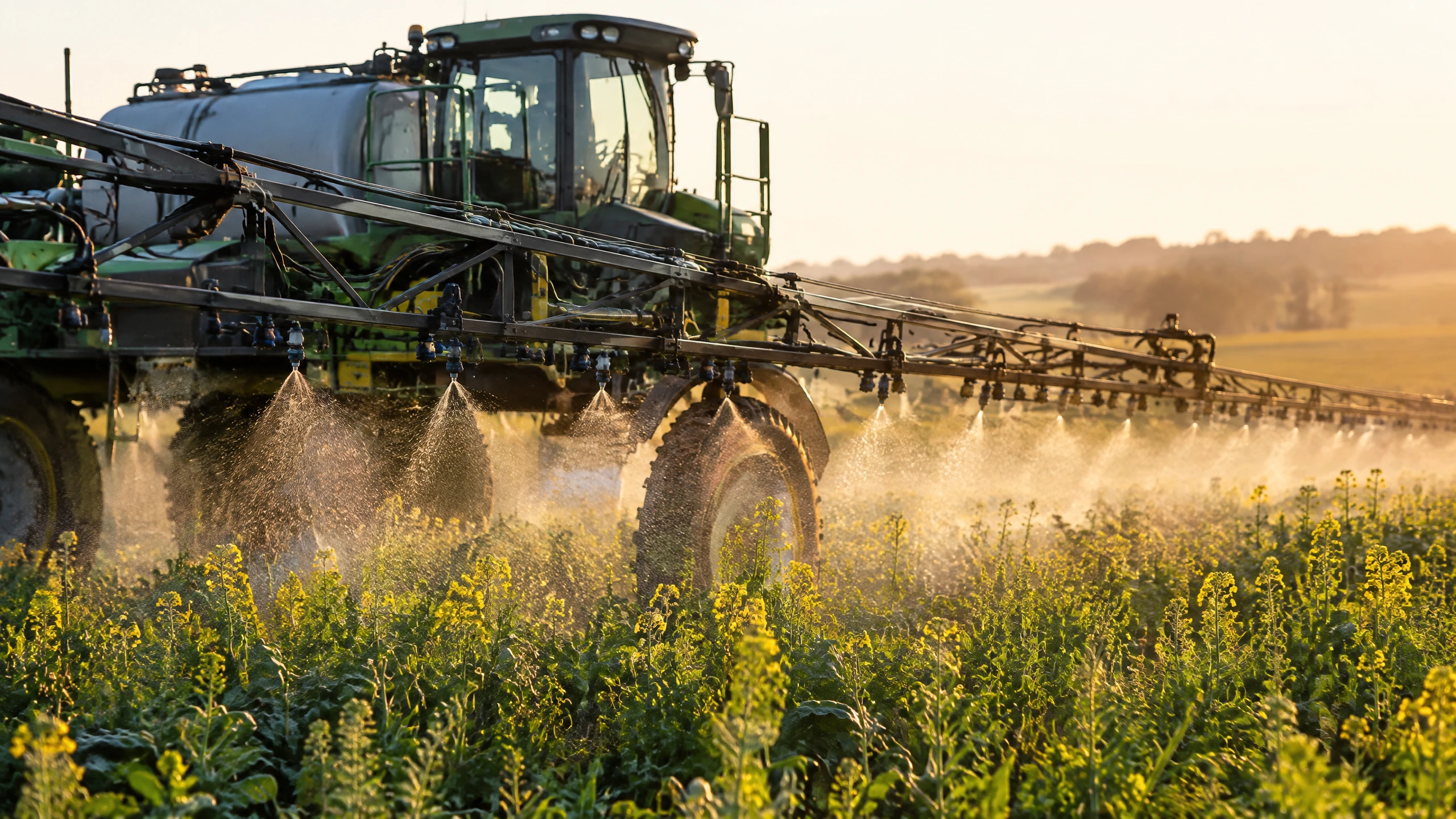
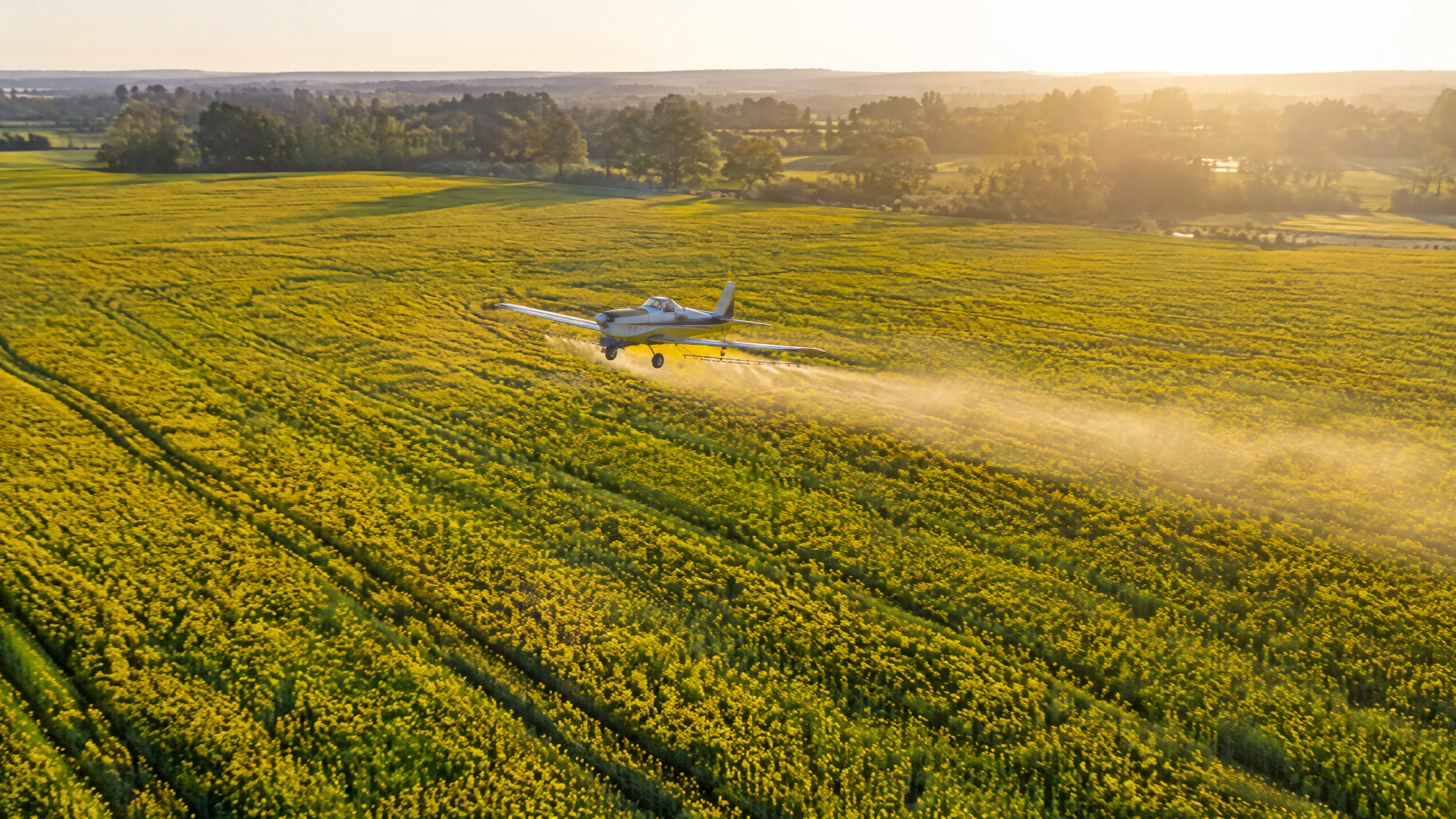
Boron is immobile in the phloem of most plant species — including sunflower, rapeseed, cotton, apple, citrus, and almond. Unlike nitrogen, phosphorus, or potassium, boron deposited in mature leaves cannot be translocated to young leaves, flowers, or developing fruit. The boron that reaches developing tissues during the critical flowering and pollen germination stage must come from the soil or from foliar spray applied directly to the active growing parts at the correct time. Foliar spray during the pre-flowering window (5–10 days before first flower opening) delivers boron directly to the pollen mother cells, gynoecia, and stigma surfaces where it is needed for pollen tube germination and elongation — the single most boron-sensitive process in crop production. The engineering requirement for foliar spray is that the boron source must dissolve completely in the spray tank at ambient temperature — and at a concentration high enough to deliver the target boron rate in the spray volume being applied (typically 150–400 L/ha). Boric acid at 20°C produces a maximum aqueous concentration of approximately 1.5 g B/L (as boric acid approaches saturation at 57.2 g/L). Solubor at the same temperature allows concentrations of 2.5–4.0 g B/L without precipitation — enabling the target boron rate to be achieved in a smaller spray volume, or the same spray volume to deliver a higher boron dose.
More boron per kg than boric acid (56.3%), borax pentahydrate (47.8%), ulexite (43–47%), or colemanite (38–42%). Lowest material cost per kg of boron applied to crop.
Allows spray tank concentrations of 2.5–4.0 g B/L vs boric acid maximum of ~1.5 g B/L. Enables target boron dose in standard spray volumes without heating or pre-dissolving.
Boron immobility in phloem means late application cannot correct deficiency in developing flowers. Solubor's rapid dissolution is essential when spray windows are narrow and multiple applications must be completed quickly.
Solubor / DOT — analytical specification and physical properties
| Parameter | Test method | Specification | Technical significance |
|---|---|---|---|
| B₂O₃ content | ICP-OES · ASTM D 3008 / Titrimetric | 67.3% (67.0–68.0%) | Highest B₂O₃ of all standard agricultural boron products. Confirmed per production batch. Basis for all foliar spray rate calculations — convert kg Solubor to kg B by multiplying by 0.673. |
| Na₂O content | ICP-OES · Flame photometry | ~16.3% (15.8–16.8%) | Sodium component relevant for: (1) sodium-sensitive crops at high rates — check with agronomist; (2) glass batch calculations; (3) wood treatment solution pH management. |
| Moisture (H₂O as crystal water) | Thermogravimetric · Karl Fischer | ~16.4% (4 moles H₂O) · As-shipped surface moisture ≤0.5% | Crystal water is the 4 moles of H₂O in the chemical formula — not free moisture. Surface moisture ≤0.5% confirms good drying in the production process and predicts free-flowing handling without caking. |
| Na₂SO₄ (sodium sulphate) | Ion chromatography | ≤0.2% | Sulphate impurity affects spray solution quality and pH. At high sulphate, precipitation with calcium in hard water can occur — relevant for foliar spray in hard-water regions. Confirmed per batch. |
| Water solubility at 20°C | Gravimetric dissolution at 20°C ± 0.5°C | 97 g/L (95–100 g/L) | DEFINING CHARACTERISTIC — highest solubility of any commercial boron product. Enables spray concentrations of 2.5–4.0 g B/L in cold water. Confirmed per batch for consistency between production lots. |
| Water solubility at 40°C | Gravimetric dissolution at 40°C | ~250 g/L | Highly concentrated wood treatment solutions (10–25 g B/L) prepared at 40–60°C use this solubility advantage. Aircraft foliar application concentrate solutions prepared at elevated temperature benefit similarly. |
| pH (1% aqueous solution) | Potentiometric pH meter | 9.0–10.0 | IMPORTANT: Solubor solution is alkaline (pH 9–10). Must check tank-mix compatibility with acidic pesticide formulations (most foliar fungicides/insecticides are acidic). Incompatible with calcium-containing fertilizer solutions — precipitation occurs. |
| Appearance | Visual inspection | White free-flowing powder or fine granules · Odourless | Caked product indicates moisture exposure during storage — check packaging integrity before use. Discolouration (yellow/tan) indicates contamination or degradation — reject and investigate. |
| Bulk density | ISO 3923 | ~900–1,000 kg/m³ | Required for spray tank filling equipment and warehouse storage volume planning. Higher bulk density than borax decahydrate — more boron per cubic metre of storage. |
| Particle size (standard powder) | Laser diffraction · ISO 13320 | D90: ≤500 μm · D50: 100–200 μm | Fine enough to dissolve rapidly in spray tank agitation within 10–15 minutes at ambient temperature. Not so fine as to create airborne dust during bag-emptying at the spray tank. |
| Water-soluble B₂O₃ | EN 16047 — extraction + ICP-OES | 67.0–68.0% (same as total B₂O₃) | For fertilizer registration under EU Regulation 2019/1009: water-soluble B₂O₃ = total B₂O₃ for Solubor (all boron in the product is water-soluble). Critical for regulatory approval as a water-soluble boron micronutrient. |
| Packaging and logistics specification | |||
| Standard packaging | — | 25 kg PP woven bags (HDPE inner liner) · 500 kg FIBC · 1,000 kg FIBC | Agricultural end-users typically order 25 kg bags. NPK blenders and wood treatment companies prefer FIBC for pneumatic handling. All packaging sealed against moisture ingress. |
| Storage requirements | — | Cool, dry warehouse · Temperature ≤40°C · Keep away from strong acids and calcium-containing materials | Stable indefinitely if stored dry. Contact with strong acids generates boric acid and borate salts — keep separate from sulfuric acid, hydrochloric acid. Calcium contamination causes borate-calcium precipitation. |
| FCL capacity | — | ~20–22 MT per 20' FCL (25 kg bags palletised) · ~24 MT (FIBC) | FOB Bandırma Port · FOB Mersin Port · CIF destination available · LCL consolidation for ≤3 MT requirements |
Why Solubor is the technically correct selection in each of its four primary markets
| Application | Technical mechanism | Solubility advantage — the specific reason boric acid is technically inferior here | Critical parameters / timing | Dosage and rate | Key markets |
|---|---|---|---|---|---|
| Agricultural foliar boron spray (primary and largest use) | Solubor dissolves in spray tank to produce B(OH)₃ / B(OH)₄⁻ aqueous solution at 2.5–4.0 g B/L. Solution is applied to crop canopy. Borate ions penetrate the leaf cuticle (lipophilic cuticle pathway + aquapore pathway) and reach the phloem loading zone within 24–48 hours. At the developing flower and pollen mother cell, boron is incorporated into cell walls (as rhamnogalacturonan II — borate ester complex), where it is essential for structural integrity of the primary cell wall and for pollen tube elongation during fertilisation. | Boric acid maximum practical spray concentration at 20°C: ~55 g/L solution = ~1.5 g B/L. Solubor maximum practical concentration at 20°C: ~130 g/L solution = ~3.8 g B/L. To achieve 200 g B/ha target rate at 200 L/ha spray volume, boric acid requires spray concentration of 1.0 g B/L — approaching maximum solubility, with risk of precipitation in cold conditions. Solubor achieves the same rate comfortably at 1.0 g B/L with large safety margin against precipitation. | Timing: 5–10 days before first flower opening (pre-bloom) for annual crops. For tree crops: bud swell through bloom. A second application at petal fall often recommended for high-demand crops. pH compatibility: check with tank-mix partners (pH 9–10 is alkaline — incompatible with calcium nitrate). | 100–300 g Solubor/ha per application (= 67–200 g B/ha). Dissolved in 200–400 L water/ha. 1–3 applications per season depending on crop and deficiency severity. | India (sunflower, rapeseed, cotton, sugar cane) · Brazil (soybean, cotton, citrus) · SE Asia (palm oil, rubber) · Mediterranean (olive, almond, citrus) · Turkey (sunflower, hazelnut, fruit) |
| Wood preservation — borate diffusion treatment of green timber | Green (freshly sawn) timber at moisture content above 30% (fibre saturation point) is immersed in or brushed with concentrated Solubor solution (10–25 g B/L). Borate ions diffuse into the wood via the free water pathway — moving down the moisture gradient from the high-concentration solution into the wood fibre over 4–16 weeks of covered storage. As the timber dries, borate ions become fixed in the dried fibre matrix. The result: evenly distributed boron throughout the timber cross-section at 0.2–0.5% m/m as B₂O₃, protecting against Anobiidae (deathwatch beetle), Lyctidae (powder post beetle), Bostrychidae, Serpula lacrymans (dry rot), and Reticulitermes (subterranean termite). | High concentration solution required for practical penetration depth (4–16 weeks treatment time). Solubor at 250 g/L solubility at 40°C allows working solutions of 120–200 g/L at mild heating — achieving the required 0.2–0.5% B₂O₃ retention in the finished timber. Boric acid solubility at 40°C is only ~170 g/L — significantly constraining maximum solution concentration for dip treatment systems. | Green timber moisture content must be ≥30% at treatment start. Coverage: full dip immersion or brush/spray followed by covered stackpile storage. Treatment temperature: 20–60°C. Penetration depth dependent on timber species, moisture content, and treatment duration. | Working solution: 10–25 g B/L for dip · Brush/spray: 40–80 g/L concentrated. Target retention: 0.2–0.5% B₂O₃ m/m in dried timber (varies by hazard class — EN 335). | New Zealand (structural framing) · Australia (building timber) · USA (residential framing — boron treated) · UK (heritage timber repair) · Turkey (construction and furniture timber) |
| Fire retardant formulations — timber and cellulosic materials | Solubor dissolved in water is applied to timber or cellulosic insulation as an impregnation treatment or included in intumescent coating formulations. During combustion above ~250°C, B₂O₃ is released from the borate salt and forms a continuous vitreous (glassy) layer on the char surface. This glassy B₂O₃ layer functions as a physical barrier that limits oxygen diffusion to the pyrolysing wood surface, reduces flame spread rate, and inhibits the production of combustible volatiles (CO, methane, hydrogen). Acting synergistically with phosphorus-based fire retardants (phosphate esters or ammonium phosphate), borate-phosphate FR systems provide both gas-phase radical quenching (boron) and char-forming (phosphorus) effects. | Solubor's high solubility allows incorporation into water-based intumescent coating formulations at boron loadings of 5–15% B₂O₃ in the dried coating film — much higher than achievable with borax (lower B₂O₃ content) or colemanite (lower solubility limits aqueous incorporation). The water-soluble nature of Solubor also enables impregnation of cellulose insulation at the slurry mixing stage during blown-in insulation production. | Application: pressure impregnation, dip, spray, or brush for timber. For blown-in cellulose insulation: borate slurry mixed into cellulose fibre at manufacturing stage. For intumescent coating: incorporated into binder matrix during coating formulation. | 10–15% Solubor by weight of dry timber for FR impregnation. Cellulose insulation: 10–20% borate by weight of finished product. Intumescent coating: 5–15% B₂O₃ in dried film. | EU building construction (EN 13501-1 fire class compliance) · North America (building code compliance) · Turkey (fire safety regulation compliance) |
| Borate insecticide and pesticide formulations | Disodium octaborate is an approved active ingredient in borate-based insecticide formulations for wood-boring insect control and crawling pest (cockroach, ant) management. Borate ion (B(OH)₄⁻) is toxic to most insects via interference with energy metabolism — specifically inhibition of the succinylCoA synthetase enzyme in the citric acid (Krebs) cycle. In cockroach bait formulations, borated sugar bait is consumed and kills the insect within 3–7 days, with slow onset ensuring the insect returns to the nest and exposes other colony members. In termite treatment, applied to wood surfaces or injected into soil, borate ions are ingested during wood feeding and during social feeding (trophallaxis) within the colony. | Solubor's high solubility enables formulation of effective borate insecticide baits at practical sugar-borate ratios. Solubor also dissolves completely in the liquid binder matrices used in surface spray insecticide formulations — achieving the required active concentration without residue or settling in the spray tank. | Cockroach bait: 5–10% disodium octaborate in sugar/protein bait matrix. Wood-boring insect prevention: 0.5–2.0% B₂O₃ solution applied to timber surfaces. Termite soil treatment: 2–4% B₂O₃ solution injected or drenched around foundation perimeter. | Cockroach bait: 0.5–5 g Solubor per bait station. Timber surface spray: 50–100 g Solubor/L working solution. Termite drench: 20–40 g Solubor/L soil injection solution. | Professional pest control operators · Building and construction sector · Food processing facilities · Hospital and institutional pest management |
Every document your agricultural, wood treatment, or industrial procurement requires
- EN 16047 — Water-soluble B₂O₃ in fertilizers
- EU Fertiliser Regulation 2019/1009
- FAO crop boron recommendations
- ASTM D 3008 — B₂O₃ determination
- ISO 13320 — Particle size (laser)
- Phytosanitary certificate (per destination)
- EN 335 — Hazard classes for wood (1–5)
- EN 599-1 — Biocide performance testing
- AWPA Standard E22 — Borate analysis
- NZS 3602 — NZ timber treatment
- BS 8417 — UK wood preservation
- BPR 528/2012 — EU Biocidal Products
- EN 13501-1 — Fire classification (EU)
- ASTM E 84 — Surface burning characteristics
- BS 476-7 — Surface spread of flame
- ISO 5657 — Ignitability test
- REACH SVHC compliance declaration
- RoHS 2011/65/EU — compliant
- REACH Reg. 1907/2006 — registered
- CLP Regulation 1272/2008 — labelled
- ICP-OES trace analysis per COA
- MSDS — EU GHS format
- Turkish Certificate of Origin
- Kosher certification (batch basis)
B₂O₃ (ICP-OES and titrimetric), Na₂O, Na₂SO₄, moisture, pH, water solubility at 20°C, particle size — all confirmed per Eti Maden production batch. Traceable lot number.
Water-soluble B₂O₃ = total B₂O₃ for Solubor (100% water-soluble). EN 16047 extraction method confirmed per batch. Essential for EU Fertiliser Regulation 2019/1009 compliance and agrochemical product registration.
Turkish Ministry of Agriculture phytosanitary certificate — required for import into India, Brazil, SE Asia, and various African markets for agricultural products. Arranged on advance request per shipment.
EU Biocidal Products Regulation 528/2012 compliance data for wood preservation and insecticide applications. Active substance efficacy data and safety data sheet for biocide formulation registration support.
Solubor / DOT — key supply metrics
Specify application (foliar/wood treatment/fire FR), volume, and destination. Quote within 4 hours.
Agricultural foliar: 25 kg bags preferred · Wood treatment and FR: FIBC for large-volume handling · EN 16047 water-soluble B₂O₃ certificate and phytosanitary certificate standard on all agricultural orders · FOB Bandırma or Mersin · CIF destination worldwide.