Products · Rotating Equipment & Pumps

Process pumps sized to your hydraulic duty. Mechanical seals selected to API 682.

Both delivered with the quotation.

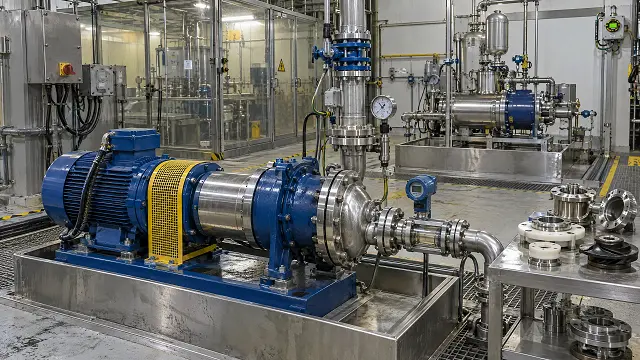
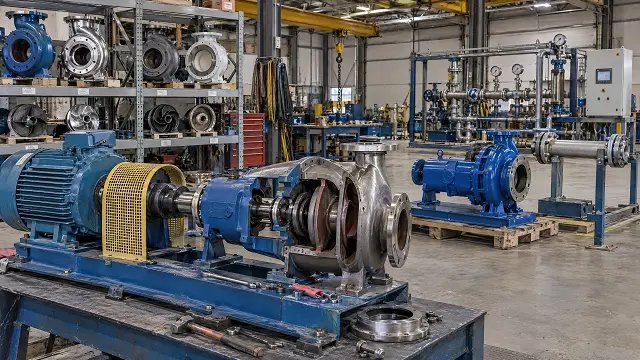
API 610 centrifugal, API 674 reciprocating, API 675 metering, and API 685 sealless pumps — with hydraulic duty review confirming operating point, NPSH margin, and driver power, and API 682 mechanical seal plan selection, all issued at quotation stage before the purchase order is placed.

Submit Pump Duty Conditions Download Pump Data Sheet
API 610 · API 674 · API 675 · API 685 Hydraulic duty review — standard NPSH margin confirmed — every order API 682 seal plan — at quotation ATEX Zone 1 · IECEx motors
Pump supply — key metrics
4
API Pump Standards
API 610 · 674 · 675 · 685 — covered
0.6m
Minimum NPSH Margin
Per API 610 — confirmed at quotation
682
API Seal Plan
Selected and documented at quotation stage
24hr
Quotation + Duty Review
Hydraulic review returned with the quotation
Standards we supply to
API 610 12th Ed. API 674 3rd Ed. API 675 3rd Ed. API 685 2nd Ed. API 682 4th Ed. ANSI B73.1 ISO 9908 ATEX Zone 1 IECEx API 686 (alignment)
Why Global Trading for Rotating Equipment

Three engineering deliverables that most pump suppliers charge extra for — we include with every quotation.

Hydraulic Duty Review — Operating Point, NPSH, Driver Power

Flow rate and head matched to the pump curve; NPSHa vs. NPSHr margin confirmed to 0.6 m API 610 minimum; operating point confirmed between 70–120% BEP; driver power calculated at rated flow including density and viscosity correction — all returned with the commercial quotation.

API 682 Seal Plan Selection — Specified Before the PO

Process fluid compatibility, temperature, pressure, and viscosity assessed against all applicable API 682 seal plans. Plan recommended and documented — including seal support system (pot, cooler, reservoir, accumulator) — at quotation stage. Not chosen by the pump manufacturer after the order is placed.

Complete Pump Package — Baseplate, Coupling, Motor, Seal

Factory-assembled and tested complete packages: API 610 pump + API 686 aligned baseplate + non-sparking disc coupling + ATEX motor + API 682 seal with Plan support system + instrumentation connections. Factory acceptance test (FAT) with TPI available.

Full API 610 Documentation — Performance Curve to Vibration Data

Hydraulic performance curve at rated and tested conditions; NPSH test curve; rotor dynamics report (multistage); mechanical seal test certificate; vibration data per API 610 Section 11; material certificates for wetted parts; 2-year normal operation spare parts list.

Pump Types

Five pump families across the API and ANSI spectrum — from low-flow metering to high-head multi-stage centrifugal.
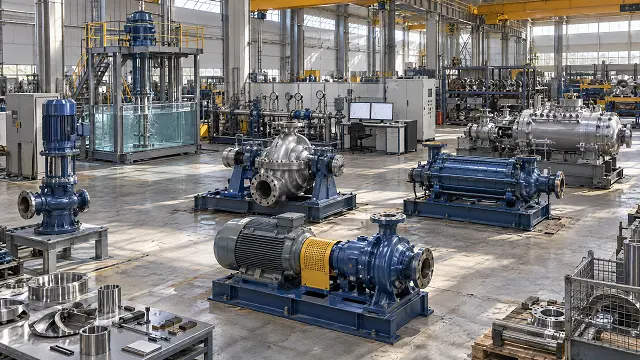
Single and multi-stage centrifugal pumps for oil, gas, refinery, and petrochemical service.

Pump Type 01 — API 610 Centrifugal Pumps

Single and multi-stage centrifugal pumps for oil, gas, refinery, and petrochemical service.

API 610 centrifugal pumps covering the full type matrix: OH2 (frame-mounted overhung — most common process pump), OH3 (vertical in-line), BB1 (between bearings, axially split single-stage), BB2 (between bearings, radially split single-stage double-suction), BB3 (between bearings, horizontal multi-stage), BB5 (barrel double-casing multi-stage — highest pressure), and VS vertical submerged types (VS1 through VS7). Hydraulic duty review confirms operating point location on the pump curve (70–120% BEP per API 610 Section 6.1.2), NPSHa margin over NPSHr, and driver power at all specified operating conditions including start-up, rated, and maximum flow. All wetted parts in API 610-specified materials for the service fluid.
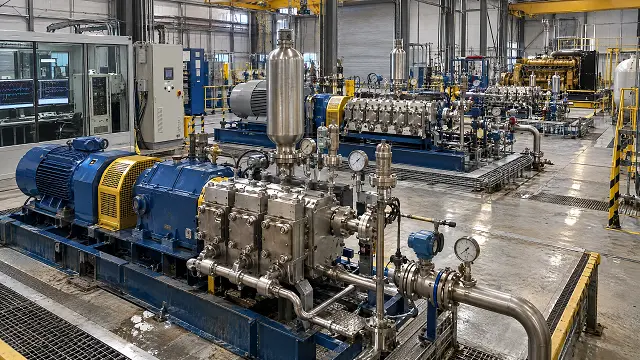
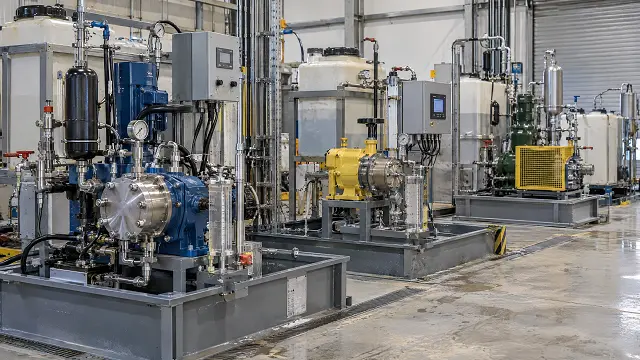
Pump types OH1/OH2/OH3/OH4 · BB1/BB2/BB3/BB4/BB5 · VS1–VS7
Flow range OH2: 2–2,000 m³/h · BB3: up to 12,000 m³/h · BB5: up to 4,000 m³/h
Head range OH2: up to 300 m · BB3: up to 1,200 m · BB5: up to 3,000 m per stage
Temperature −120°C to +400°C (LT to high-temp service with appropriate materials)
Wetted materials CF8M (316 SS) · CD4MCu Duplex · Alloy 20 · Hastelloy C-276 · Titanium · Nickel
Standards API 610 12th Ed. · API 682 4th Ed. (seals) · API 686 (installation) · ATEX Zone 1
API 610 12th Ed. OH2 · BB3 · BB5 NPSH Confirmed API 682 Seal ATEX Zone 1
Our supply standard

Three deliverables on every pump order that eliminate the three most common pump procurement errors.

01
NPSH margin confirmed — before the pump is ordered

The most common cause of pump failure in process plants is insufficient NPSH margin — the pump cavitates because the available suction head (NPSHa) is too close to the pump's required NPSH (NPSHr). API 610 Section 6.1.2 requires NPSHa to exceed NPSHr by a minimum of 0.6 m (2 ft) at the rated flow rate. We calculate NPSHa from the system conditions provided (suction vessel pressure, liquid level, suction pipe losses, vapour pressure at process temperature) and confirm the margin against the pump manufacturer's NPSHr curve at the rated and maximum flow conditions. If the margin is insufficient, we propose a pump with lower NPSHr or a suction booster — before the purchase order, not after the pump fails on commissioning.

0.6m API 610 minimum All flow conditions Written confirmation

02
API 682 seal plan selection — with seal support system

Mechanical seal failure is the most frequent cause of pump maintenance downtime in process plants. The correct API 682 seal plan selection for the process fluid and operating conditions is not a routine decision — it requires engineering assessment of fluid compatibility, flush fluid availability, pressure and temperature envelope, and LDAR requirements. We review the process fluid, temperature, pressure, and vapour pressure against the API 682 seal category (Category 1, 2, or 3) and the applicable seal plans, and specify the plan and the seal support system (reservoir, cooler, accumulator, buffer fluid) in the pump quotation. The seal plan is confirmed with the pump manufacturer before the order is placed — not delegated to the pump manufacturer's standard offering.

API 682 4th Ed. Plan 11/21/23/32/53A/54 Support system included

03
BEP operating point confirmed — not assumed within range

API 610 Section 6.1.1 requires the rated operating point to fall between 70% and 120% of the pump's Best Efficiency Point (BEP) flow rate. Operating consistently outside this range causes elevated radial thrust loads on the impeller — accelerating bearing wear and mechanical seal degradation. Many pump proposals present a pump whose rated point appears on the performance curve but whose BEP proximity is never explicitly confirmed. We confirm BEP proximity for every pump we quote — stating the percentage of BEP flow at the rated operating point and at the maximum and minimum continuous flow rates. If the pump curve does not place the rated point within the API 610 allowable range, we select an alternative pump or trim the impeller to bring the operating point into the acceptable window.
70-120% BEP confirmed All specified cases Impeller trim if needed

API 682 Mechanical Seal Plans

The six most common API 682 seal plans — selected at quotation stage based on your process fluid and operating conditions.

1

Recirculation from pump discharge

Flush from pump discharge through orifice to seal chamber. Self-regulating. No external utilities required.
For: Clean, non-polymerising, non-crystallising fluids. Most common plan.
2

Recirculation through cooler

Same as Plan 11 but flush passes through a heat exchanger before the seal chamber. Cools the flush for hot service.
For: Hot service above 80°C where uncoated flush would exceed seal temperature limit.
3

Internal flush circuit with cooler

Integral pumping ring circulates seal fluid through a cooler — no connection to pump process fluid. Lowest heat generation.
For: Very high temperature (above 150°C) where heat soak would otherwise cause vaporisation at the seal faces.
4

External clean flush injection

Clean external fluid injected into seal chamber from an external source. Maintains positive pressure at seal faces.
For: Dirty, abrasive, or crystallising fluids where product cannot be used as seal flush.
5

Pressurised barrier fluid (reservoir)

Pressurised barrier fluid maintained by nitrogen blanket reservoir — higher pressure than process, creating inward flow.
For: Toxic, flammable, or carcinogenic fluids requiring absolute containment (dual seal arrangement).
6

Pressurised external barrier fluid

External pressurised barrier fluid system (pump + reservoir + cooler) delivers barrier fluid at pressure above process.
For: High-pressure or high-temperature toxic service where Plan 53A reservoir pressure is insufficient.

Why API 682 seal plan selection must be made before the pump order — not after

The API 682 seal plan determines the seal support system — reservoir, cooler, accumulator, piping connections — that must be designed into the pump installation. If the seal plan is not specified before the pump is ordered, the pump is delivered with a seal chamber that may not accommodate the correct plan connections, the piping design does not include the seal support system, and the utility supply (cooling water, nitrogen, external flush fluid) is not provisioned in the facility design. Changing the seal plan after installation requires modifying the seal chamber, re-piping the seal support, and potentially reordering the seal. We specify the API 682 seal plan with every pump quotation and document the seal support system required so the piping design, utility design, and seal order can proceed in parallel with the pump order.

API 682 Seal Category — 1, 2, or 3

API 682 defines three seal categories: Category 1 covers general-purpose services; Category 2 applies to process services with higher performance requirements (reduced leakage, broader temperature range); Category 3 applies to toxic, highly flammable, or environmentally harmful fluids where dual containment with a barrier fluid is required. We confirm the correct category before specifying the seal — because a Category 1 seal installed in a Category 3 service will not provide the required containment performance and will not comply with LDAR or permit requirements for that service.
Industries & Applications

Six industries. Different pump types, different seal plans, different materials — all confirmed at specification.

Oil & Gas — Upstream

Produced water injection (API 610 BB3/BB5 for 200–600 bar injection pressure), wellhead booster pumps (OH2), chemical injection metering pumps (API 675), and pipeline booster centrifugal pumps (BB1, BB2). NACE MR0175 materials for H₂S-containing produced water. ATEX Zone 1 motors. API 682 Plan 11 or 32 depending on water quality and suspended solids content.

• Water injection: BB3/BB5 API 610, 200–600 bar, NACE
• Chemical injection: API 675 HADD, ATEX, 4–20 mA control
• Seal plan: Plan 11 (clean water) or Plan 32 (dirty/sour water)

Refinery & Downstream

Hot oil transfer (OH2, API 610, A217 WC6 casing for above 260°C), hydrocarbon booster pumps, boiler feed water (BB3 or BB5 multi-stage, up to 200 bar), and vacuum residue transfer (OH4 vertical inline for viscous hot service). API 682 Plan 23 for hot service, Plan 53A for toxic hydrocarbons. LDAR emission monitoring on all process pump seals.

• BFW pumps: BB3/BB5, up to 200 bar, Alloy steel casing
• Hot oil: Plan 23 seal (heat soak management above 150°C)
• Toxic HC: Dual seal Plan 53A or API 685 sealless

Petrochemical & Chemical

Caustic transfer (Alloy 20 or nickel casing), acid service (PTFE-lined ANSI or Hastelloy C-276 API 685 sealless), HF alkylation (API 685 mag-drive — no seal, no emission), and chlorinated solvent transfer. API 682 Category 3 seal or API 685 sealless for toxic chemical service. PMI (Positive Material Identification) report on all wetted parts for exotic alloy pumps.

• HF service: API 685 mag-drive, Hastelloy C-276, zero emission
• Acid service: PTFE-lined ANSI or Alloy 20 API 610
• Caustic: Alloy 20 or high-nickel casing with Plan 53A dual seal

Power Generation

Boiler feed pumps (BB3 or BB5 multistage, 150–300 bar, to ASME B31.1), condensate extraction pumps (VS4 vertical submerged), circulating cooling water pumps (BB1 double-suction, large-bore, low NPSH), and fuel oil transfer (OH2 with heating jacket for viscous heavy fuel oil above 60°C). API 682 Plan 23 for high-temperature BFW seal temperature management.

• BFW: BB5 double-casing, 200+ bar, Plan 23 seal
• Condensate: VS4 submerged, low NPSH, stainless
• Cooling water: BB1 double-suction, 5,000+ m³/h, Plan 11

Water & Desalination

High-pressure sea water reverse osmosis (SWRO) feed pumps (BB5 ceramic-coated or super duplex 2507 for chloride resistance at 60–80 bar), energy recovery device (ERD) booster pumps, concentrate recirculation, and chemical dosing for antiscalant, acid, and biocide injection. API 675 metering pumps for chemical dosing. Duplex 2205 and super duplex 2507 for seawater and brine service.

• SWRO feed: BB5, 60–80 bar, super duplex 2507 or ceramic coat
• Chemical dosing: API 675 HADD, 4–20 mA control, ATEX
• Brine transfer: Duplex 2205 OH2 with Plan 11

Mining & Mineral Processing

Slurry transfer pumps (rubber-lined or hard-metal lined centrifugal for ore slurry), tailings transfer (high-chrome white iron or rubber), process water, and reagent dosing (API 675 for flotation reagents). Slurry pumps are not API 610 — they are designed specifically for high-solids content and abrasive wear resistance. Expeller seal (no mechanical seal) or mechanical seal with Plan 32 clean external flush for slurry applications where product flush would fail the seal rapidly.

• Ore slurry: Rubber or high-chrome hard-metal impeller and liner
• Seal: Expeller or Plan 32 clean external flush for slurry service
• Reagent dosing: API 675 metering, low-flow accuracy ±1%

Standards & Certifications

The pump, seal, and installation standards confirmed at specification on every rotating equipment order.

⚙️ API PUMP STANDARDS
API 610
12th Edition — centrifugal pumps for petroleum, petrochemical and natural gas industries. Type OH, BB, VS.[cite: 11]
API 674
3rd Edition — positive displacement pumps — reciprocating. Triplex/quintuplex plunger for high-pressure injection.[cite: 11]
API 675
3rd Edition — positive displacement pumps — controlled volume for chemical injection and dosing service.[cite: 11]
API 685
2nd Edition — sealless centrifugal pumps. Magnetically coupled and canned motor types for zero-emission service.[cite: 11]
ANSI B73.1
Horizontal end-suction centrifugal pumps — dimensionally standardised for chemical process service.[cite: 11]
ISO 2858
End-suction centrifugal pumps — international standard, interchangeable with ANSI B73.1 on mounting dimensions.[cite: 11]

🛠️ MECHANICAL SEAL STANDARDS
API 682
4th Edition — shaft sealing systems for centrifugal and rotary pumps. Categories 1, 2, 3. Plans 1–99.[cite: 11]
ISO 21049
Pumps — shaft sealing systems for centrifugal and rotary pumps. International equivalent of API 682.[cite: 11]
ISO 15848-1
Fugitive emission measurement for valve stems — applicable to pump seal fugitive emission measurement.[cite: 11]
TA-Luft
German VDI 2440 — technical instructions on air quality. Fugitive emission requirements for pump seals.[cite: 11]
EPA Method 21
Determination of volatile organic compound leaks. Applicable to pump seals in US-spec projects.[cite: 11]


🛠️ INSTALLATION & TESTING
API 686
Machinery installation and installation design. Baseplate grouting, alignment, piping loads, and hot alignment.[cite: 11]
API 670
Machinery protection systems — vibration, rotor position, temperature monitoring for critical rotating equipment.[cite: 11]
ISO 13709
International equivalent of API 610 for centrifugal pumps — used on projects with European primary standard requirement.[cite: 11]
HI 1.3
Hydraulic Institute Standard for pump testing — performance test, vibration test, noise test procedures.[cite: 11]
ATEX / IECEx
Motor hazardous area approval — ATEX 2014/34/EU (EU) and IECEx (international) for Zone 1 installations.[cite: 11]


API 610 pump packages — hydraulic duty reviewed, sealed to API 682, and shipped from Istanbul to project sites across the Middle East, Africa, and Central Asia.

40+
Countries
Rotating equipment shipped to operating companies and EPC contractors in 40+ countries since 2001.
4
API Standards
API 610 · 674 · 675 · 685 — complete centrifugal and positive displacement spectrum.
0.6m
NPSH Margin
API 610 minimum NPSHa margin confirmed in writing at quotation stage — every order.
682
API Seal Plans
Seal plan selected and documented at quotation. Support system specified. Not delegated.
Frequently Asked Questions

Questions rotating equipment engineers and procurement teams ask before placing their first pump order.

Documentation — every pump order

Hydraulic duty review + NPSH calculation
API 682 seal plan selection
Performance curve (rated + test)
Rotor dynamics report (multistage)
Vibration data per API 610 S.11
Material certificates — wetted parts
ATEX declaration — motor package
2-year spare parts list
Related Products

Complete the rotating equipment package from the same supply source.

Valves & Flow Control

API 6D, API 600, ASME B16.34. Suction and discharge isolation, check valves, and PSV for pump system design.

Instrumentation & Transmitters

Pump suction and discharge pressure transmitters, temperature, flow metering, vibration monitoring per API 670.

Actuators & Control

Automated suction and discharge valves, recirculation control, ESD isolation — torque-sized, ATEX, SIL-rated.

NDT & Inspection

PAUT/TOFD ultrasonic, RT, MT for casing weld inspection. Vibration analysis and baseline spectrum recording.

Submit your pump duty conditions. Hydraulic duty review and quotation within 24 hours.

Flow rate (m³/h) · total head (m) · fluid · specific gravity · viscosity · temperature · suction conditions (pressure, liquid level, pipe losses) · NPSH available estimate · required standards (API 610 type) · area classification · seal plan preference or process data for seal selection. We review, size, select, and quote within 24 hours.


Request a Pump Quotation