Polyethylene and polypropylene selected for your application.
Not just your polymer type.
HDPE, LLDPE, LDPE, and PP grades — supplied with the correct molecular weight distribution, MFI, and additive package for your processing method and end-use. ISO 1133 melt flow index and ISO 1183 density confirmed per COA on every batch. Application-led grade selection at quotation stage.
Application-led grade selection, ISO-tested COA per batch, and logistics that reach your market competitively from Istanbul.
HDPE for blow moulding, pipe, injection moulding, film, and geomembrane are different products — same polymer backbone, fundamentally different MFI, MWD, and additive packages. We ask about your application before recommending a grade. The grade and its suitability are confirmed in the quotation.
COA per production batch states the actual ISO 1133 melt flow index (at the standard temperature and load for the grade) and actual ISO 1183 density — not specification limits. These are the processing parameters your compounding or moulding team uses to set machine parameters. Batch-specific, lot-traceable, per shipment.
PE100 pipe grade classification requires minimum required strength (MRS) of 10 MPa per ISO 9080 long-term hydrostatic regression. We confirm the PE100 classification from the manufacturer's registered data and supply the material specification datasheet confirming the hydrostatic regression classification before the purchase order.
Access to both European and Asian polymer producers from one supply point. Competitive sea freight transit to the Middle East (7–15 days) and North Africa (5–8 days). Both European-origin (PE100 with EU construction norms compliance) and Asian-origin (cost-competitive for non-CE-mark applications) available on parallel quotation.
Four polymer families. Each with multiple application-specific grades — MFI, MWD, and additive package matched to the process.
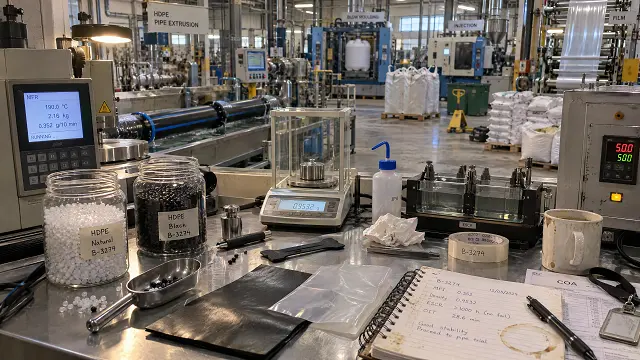
Polymer Family 01 — HDPE (High-Density Polyethylene)
HDPE grades for pipe, blow moulding, injection moulding, film, and geomembrane applications.
High-density polyethylene (HDPE) covers a wide range of application-specific grades differentiated by molecular weight distribution (MWD), melt flow index (MFI at 190°C/2.16 kg or 190°C/21.6 kg for high MW grades), density (0.941–0.965 g/cm³), and additive package (UV stabilisers, carbon black for pipe, antioxidants, slip and antiblock for film). PE100 and PE80 pressure pipe grades with hydrostatic regression classification per ISO 9080; bimodal HDPE for blow moulding fuel tanks and industrial containers with ESCR per ASTM F1473; HDPE for injection moulding (MFI 0.8–12 g/10 min at 190°C/2.16 kg); HDPE for geomembrane (smooth and textured, minimum 2% carbon black, OIT per ASTM D3895).
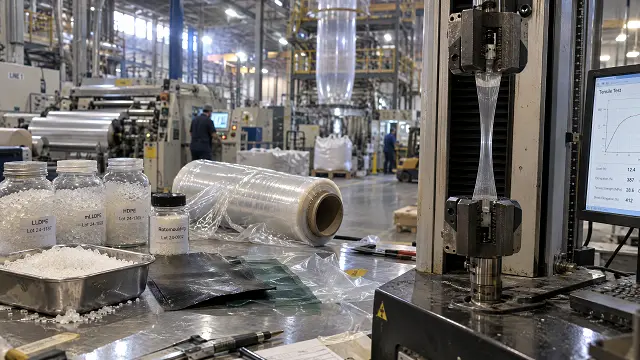
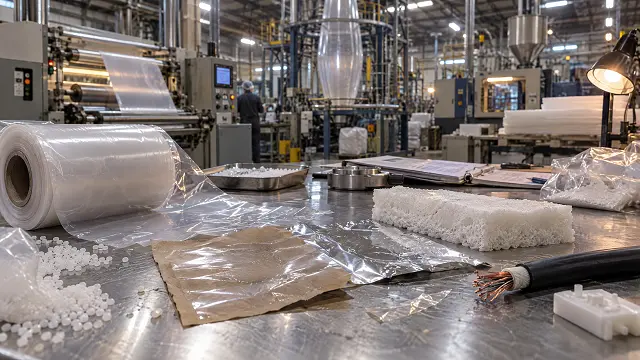
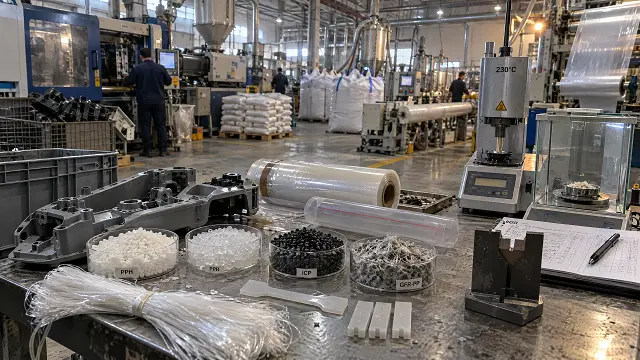
Three polymer procurement errors we prevent — by asking the right questions at quotation stage.
MFI (melt flow index) is the single most important specification parameter for polymer processability. A grade with MFI 0.3 g/10 min (suitable for blow moulding a 200-litre drum) will not run on an injection moulding machine set up for MFI 8 g/10 min — and vice versa. We ask your processing method, machine type, and cycle time requirements before recommending a grade. The MFI of the recommended grade is stated in the quotation and confirmed per ISO 1133 on the batch COA.
Specifying "HDPE pipe grade" without confirming the PE100 or PE80 classification risks receiving material that does not meet the minimum required strength for the design pressure of the pipe system. PE100 classification requires a registered long-term hydrostatic regression curve per ISO 9080 with MRS ≥ 10 MPa — this data is published in the manufacturer's registered datasheet, not assumed from grade name.We supply PE100 with the manufacturer's registered ISO 9080 classification document — not grade codes that sound like PE100 but are not registered.
A product specification document stating min/max limits for MFI and density is not a COA — it is a product standard document that tells you nothing about the specific lot you received.Every polymer shipment from Global Trading has a batch-specific COA stating the actual test values (not just pass/fail against limits) for MFI, density, and other grade-specific parameters, with the batch/lot number that matches the bag, big bag, or tanker manifest. This is the COA your QA team and your customer's QA team can use for incoming inspection and product conformity documentation.
Six parameters tested per batch — the actual values your processing and QA teams need, not just pass/fail limits.
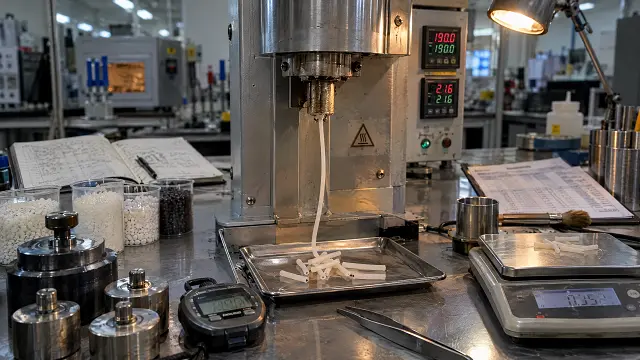
Tested per ISO 1133 at the standard conditions for the polymer type: 190°C / 2.16 kg (HDPE, LLDPE, LDPE); 230°C / 2.16 kg (PP); 190°C / 5 kg or 21.6 kg for high-MW PE pipe grades. Actual measured value stated in COA — not just the specification range.
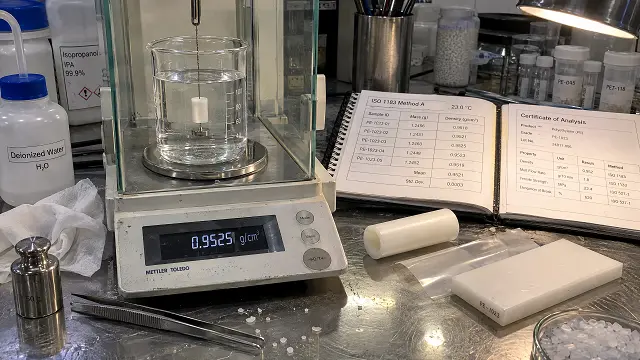
Tested per ISO 1183 (Method A, B, C, or D depending on crystallinity and form). Actual measured value in g/cm³. Density determines the stiffness, chemical resistance, and barrier properties of the material — critical for pipe, film, and packaging grade selection.
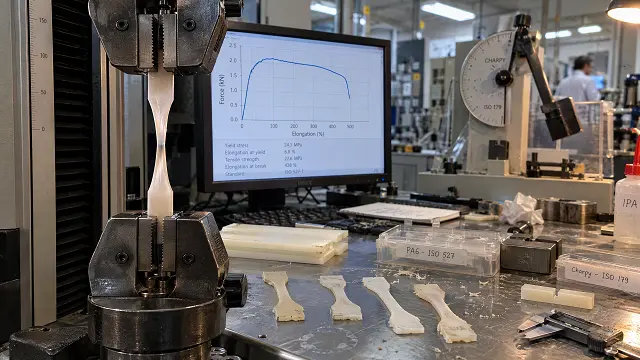
Yield stress (MPa), elongation at yield (%), and elongation at break (%) per ISO 527-1 and ISO 527-2 for structural and film grades. Confirms mechanical performance for load-bearing and stretch applications. Charpy impact (ISO 179) for PP impact copolymer grades.
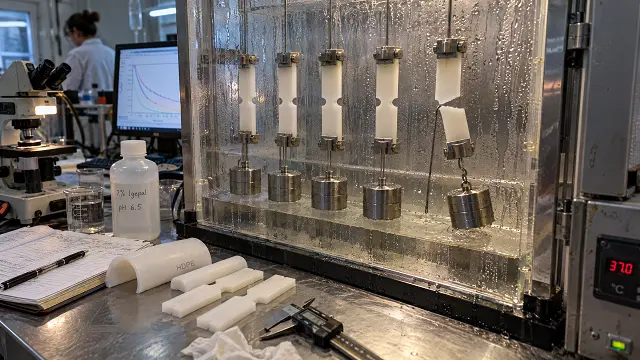
Environmental Stress Crack Resistance tested per ASTM F1473 (PENT test) for HDPE blow moulding and pipe grades. F50 (time for 50% of specimens to fail) in hours. Critical for containers, chemical tanks, and pressure pipe service where ESCR failure is the primary long-term failure mode.
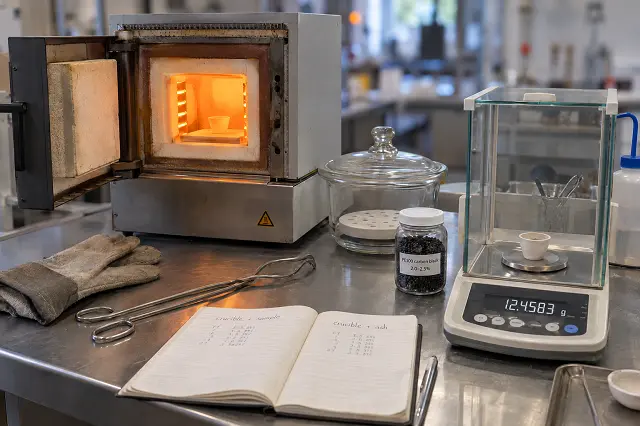
Ash content per ISO 3451 confirms the quantity of inorganic filler, pigment (carbon black), or catalyst residue in the compound. PE100 pipe grade carbon black content: 2.0–2.5% per ISO 4427. Zero-ash (natural) grades for food contact and medical applications confirmed on COA.
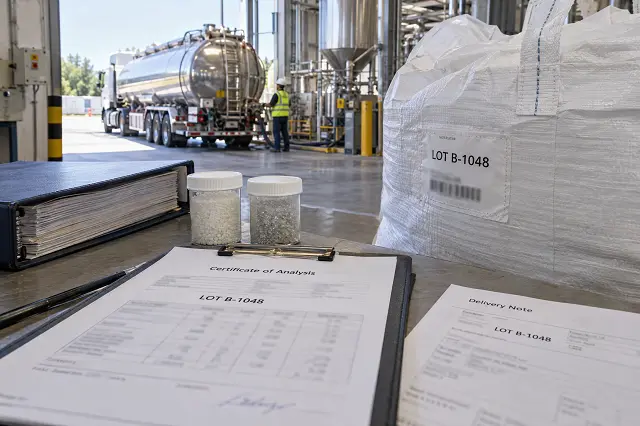
Every COA carries the specific production batch or lot number matching the markings on the bag, big bag label, or tanker delivery note. Traceability from the COA back to the production record and raw material inputs. Required for ISO 9001 incoming inspection and customer product conformity documentation.
Six industries — PE and PP grades matched to the specific application and processing requirements of each.
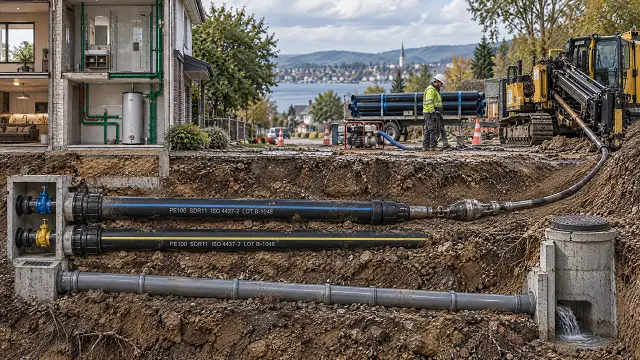
PE100 HDPE for pressure water and gas distribution pipe per ISO 4427 and ISO 4437 (SDR 11, SDR 17, SDR 26); PPR for hot and cold water plumbing per ISO 15874; PE80 for lower-pressure sewer and drainage; PE100-RC for trenchless installation and no-sand-bedding applications. MRS classification confirmed from manufacturer's ISO 9080 registered data for every PE100 order.
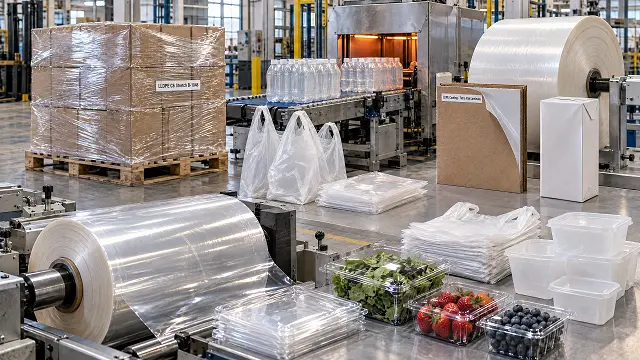
LLDPE C6 for stretch pallet wrap (high elongation, good cling); LLDPE C4 for carrier bags and shrink film; LDPE for extrusion coating of paper and board (Tetra Pak-type laminate); HDPE for grocery bags and thin-wall packaging (high stiffness, printable surface); BOPP film grade PP homopolymer (MFI 3 g/10 min at 230°C, high clarity); PP random copolymer for transparent cast film and food packaging.
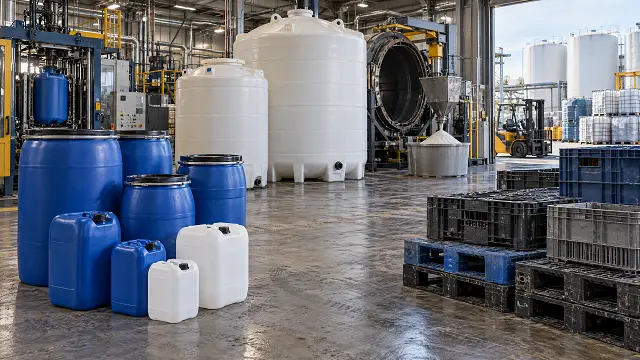
Bimodal HDPE for blow moulding chemical drums (60–220 L), jerricans (5–30 L), and UN-certified transport containers — ESCR (ASTM F1473) critical for chemical storage. HDPE for rotational moulding of 500 L to 50,000 L tanks — roto-grade dry-flow powder with particle size distribution specified. PP for injection-moulded industrial crates and pallets (ICP grade for impact at low temperature).

LLDPE agricultural mulch film (UV stabilised, metallocene grade for thinner gauge and better mechanical properties); greenhouse film with 3-layer coextrusion structure (EVA + UV-stabiliser in skin layers, LLD/LD core); LDPE greenhouse film; PP baler twine and nets (high-tenacity fibre grade PP homopolymer with MFI 10–25 g/10 min); PE irrigation pipe (PE80, HDPE 0.944 density, medium pressure).
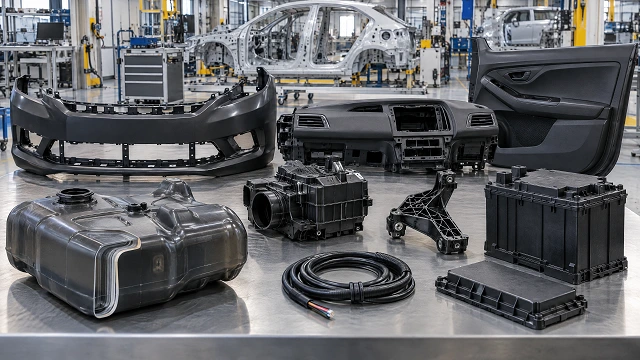
PP impact copolymer (ICP) for automotive bumpers, door panels, and instrument panels — high Charpy impact at −20°C, paintable surface; GFR-PP (30% glass fibre) for structural automotive brackets and HVAC housings replacing metal; PP homopolymer for battery cases (acid-resistant, high stiffness); HDPE for fuel tanks (bimodal, co-extrusion blow moulding grade with EVOH barrier layer compatibility); PE for wire and cable sheathing.
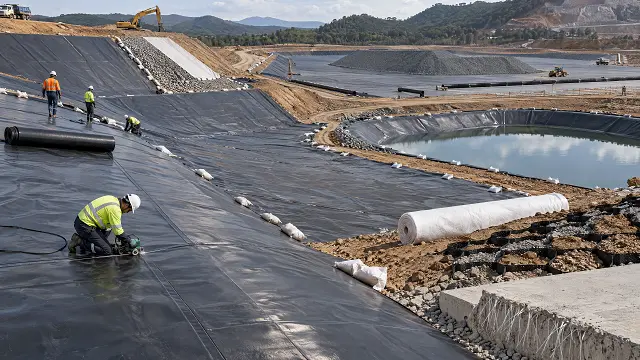
HDPE geomembrane grade for landfill lining (1.5–3 mm smooth and textured, minimum 2% carbon black, OIT per ASTM D3895 >100 minutes); HDPE for mining heap leach pads; LLDPE geomembrane for secondary containment and pond lining (lower stiffness for contouring complex shapes); PP fibre for concrete reinforcement and geotextile; PE geocell strip extrusion (UV-stabilised HDPE or LLDPE).
Questions polymer buyers ask before confirming the grade for their application.
COA parameters — every polymer batch
Tell us your application and processing method. Grade recommendation and quotation within 24 hours.
Polymer type (HDPE/LLDPE/LDPE/PP) · application (pipe/film/injection/blow) · processing method and machine type · required MFI range · any specific standards (PE100, ISO 4427, ISO 15874) · quantity · packaging preference · destination. We select, recommend, and quote.